PFAS-Free Is Not the Only Answer: Why Destruction Also Matters

PFAS-free certifications are everywhere.
Cookware brands, outdoor apparel companies, and food packaging manufacturers are racing to remove PFAS from their products, and consumers are rewarding them for it.
But there is a critical distinction that often gets lost in the conversation. Going "PFAS-free" addresses new PFAS entering the environment. It does nothing about the vast quantities of PFAS that have already been released, accumulating in soil, groundwater, drinking water, and human blood for the past 80 years.
PFAS-free is a meaningful step toward reducing future contamination. But the PFAS already in the environment will not disappear on its own, and its scale is already beyond safe limits.

What Does "PFAS-free" Actually Mean?
The PFAS-free movement refers to eliminating PFAS from product formulations and manufacturing processes. Triggered by regulatory pressure (3M's PFOS phase-out in 2000, the EU's PFOA ban in 2020, and U.S. EPA reporting requirements), the movement has accelerated rapidly.
The intent is valid: reducing the amount of new PFAS released into the environment. But PFAS-free products do not treat existing contamination. They help prevent future contamination, yet they do not solve existing PFAS pollution already present in water, soil, and industrial environments. And they cannot address the PFAS already circulating in human blood worldwide.
The Scale of Existing Contamination: Even Remote Rainwater Exceeds Limits
In 2022, researchers published a landmark analysis in ACS Environmental Science & Technology, testing rainwater samples from locations across the globe, including Antarctica and the Tibetan Plateau.
"PFAS concentrations in rainwater frequently exceeded U.S. EPA health advisories, even in the most remote locations on Earth. PFAS contamination has crossed a new planetary boundary; there is now no safe water from rain anywhere on the planet." [D-1]
This means that even if every PFAS-free initiative succeeded tomorrow, the PFAS already embedded in the global environment would remain for centuries. The C-F bond that makes PFAS so durable in products makes it equally persistent in the environment.

Why Activated Carbon and Reverse Osmosis Fall Short
The two most widely deployed PFAS treatment technologies today are granular activated carbon (GAC/PAC) adsorption and reverse osmosis (RO) membranes. Both can reduce PFAS concentrations in drinking water, but PFAS generally remains in a concentrated or captured form requiring further management.
The Activated Carbon Problem
- PFAS adsorbs onto carbon media, but is not degraded. The carbon must eventually be replaced.
- Spent activated carbon must be regenerated (often at high temperature) or incinerated.
- Incomplete incineration can release PFAS back into the atmosphere via exhaust gases.
- Landfilling incineration ash creates new leaching pathways into groundwater.
The Reverse Osmosis Problem
- RO membranes reject PFAS, concentrating it in reject water at higher concentrations.
- That concentrate still requires separate treatment. The problem has moved, not been solved.
"A review of 505 wastewater treatment plants worldwide found that conventional treatment systems consistently fail to adequately remove PFAS, with significant concentrations persisting in effluent." [D-4]
Is Incineration a Real Solution?
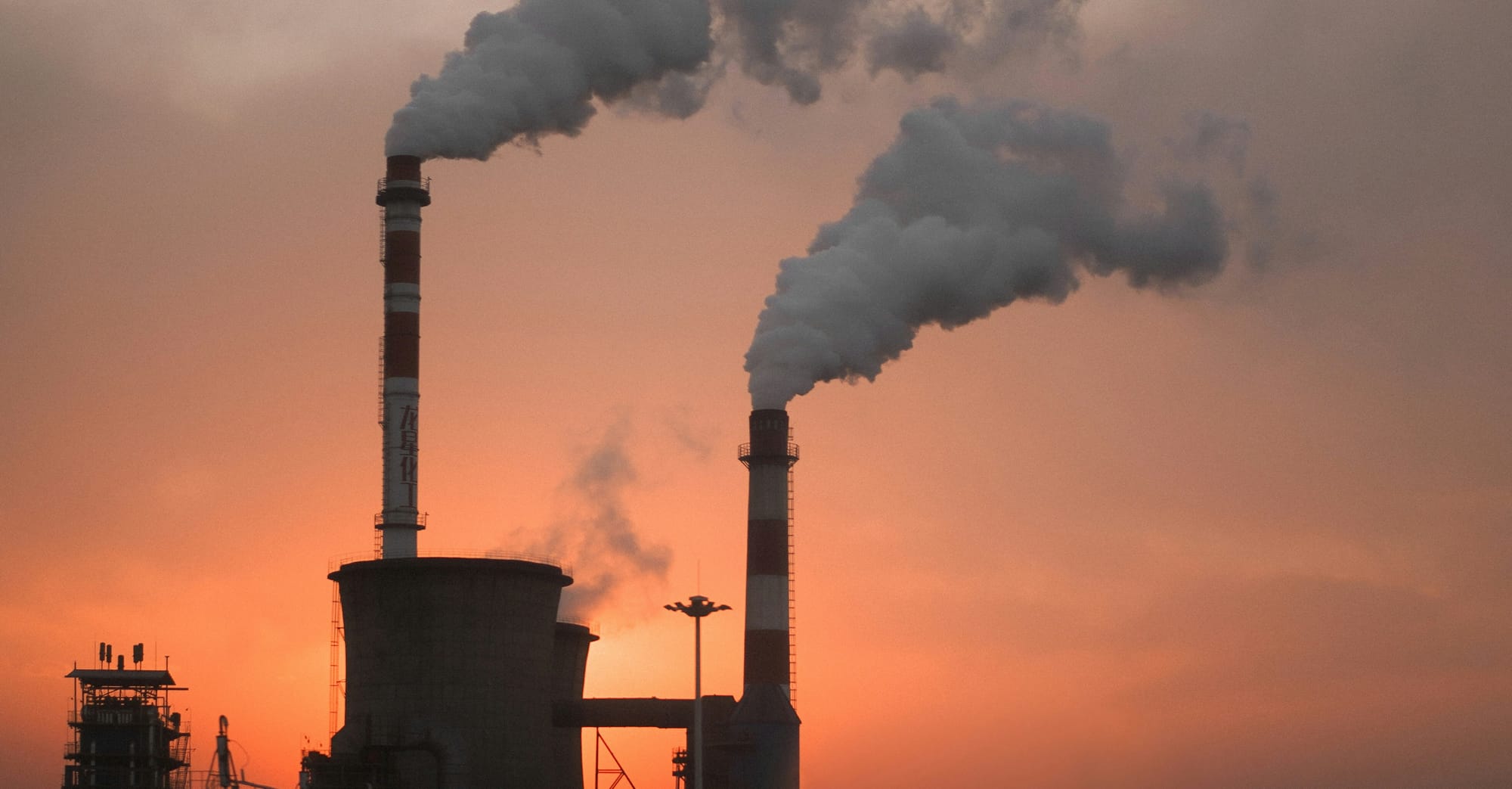
High-temperature incineration (above 1,000–1,200°C) can theoretically break C-F bonds. In practice, however, industrial incinerators rarely achieve uniform temperatures throughout their chambers. This leads to incomplete destruction: PFAS released in stack gases, or PFAS-containing ash that leaches into groundwater when landfilled. Incineration also generates significant CO₂, running counter to Scope 3 emissions commitments.
What Mineralization Actually Means, and Why It Matters
One of the most complete PFAS destruction pathways is mineralization: completely cleaving C-F bonds and converting PFAS into harmless inorganic products, namely CO₂, fluoride ions (F⁻), and water. No PFAS remains. No secondary waste is generated.
"A meta-analysis of 30 sonolysis studies confirmed that ultrasound can effectively mineralize PFAS compounds. Under optimized conditions, destruction efficiencies exceed 99%, with PFAS converted to inorganic end products including fluoride and CO₂." [A-1]
Three Requirements for Effective PFAS Treatment
| Requirement | Description |
|---|---|
| ① Actual Destruction | PFAS must be chemically broken down, not simply moved, concentrated, or transferred to another medium. |
| ② No Secondary Waste | Treatment must not generate PFAS-containing byproducts (sludge, concentrate, ash) that require further disposal. |
| ③ Chemical-free Operation | Physical energy alone, without ozone, hydrogen peroxide, or catalysts, minimizes operational complexity and secondary contamination risk. |
The FUST Lab Approach: Destruction, Not Separation
CAVITOX, developed by FUST Lab based on KRISS (Korea Research Institute of Standards and Science) core technology, uses focused ultrasonic energy to achieve mineralization of PFAS, satisfying all three requirements above.
By generating acoustic cavitation without any chemical inputs, CAVITOX directly cleaves C-F bonds in PFAS molecules. Demonstrated across 12+ PFAS compounds at 99.99%+ destruction efficiency with no secondary waste generation.
CAVITOX is a next-generation water treatment solution that directly destroys PFAS at the molecular level using focused ultrasonic energy, without chemicals, incineration, or secondary waste generation. (FUST Lab.)

Frequently Asked Questions
If I use PFAS-free products, am I protected from PFAS exposure?
PFAS-free products eliminate one exposure pathway: direct contact with PFAS in consumer goods. But contaminated drinking water, food grown in PFAS-affected soil, and workplace exposure in industries that still use PFAS remain separate concerns. PFAS-free products do not treat environmental contamination.
What is the difference between PFAS removal and PFAS destruction?
PFAS removal separates PFAS from a water source and concentrates it elsewhere: on a carbon filter, in a reject stream, or in incineration ash. The PFAS still exists and requires further management. PFAS destruction (mineralization) breaks C-F bonds entirely, converting PFAS into inorganic compounds. After mineralization, PFAS no longer exists.
Can incineration fully destroy PFAS if done at high enough temperatures?
Theoretically yes, but in practice, maintaining uniform 1,000°C+ temperatures throughout an industrial incinerator is extremely difficult. Regulatory agencies and environmental scientists increasingly view incineration as an incomplete solution, with documented cases of PFAS in stack gases and ash leachate even after high-temperature treatment.
PFAS Destruction, Not Separation
CAVITOX by FUST Lab overcomes the fundamental limitations of conventional PFAS treatment: no activated carbon, no incineration, no secondary waste. Focused ultrasonic energy directly destroys PFAS at the molecular level, validated at 99.99%+ across 12+ PFAS compounds.
Learn more about CAVITOX → sales@fustlab.com | www.fustlab.com
References
- [D-1] Cousins, I. T., et al. (2022). "Outside the Safe Operating Space of a New Planetary Boundary for Per- and Polyfluoroalkyl Substances (PFAS)." Environmental Science & Technology (ACS), 56(16), 11172–11179. Read the paper ↗
- [D-4] Coggan, T. L., et al. (2025). "A Critical Review of PFAS Analysis, Occurrence, and Fate in Wastewater Treatment Plants." Environmental Science & Technology (ACS). Read the paper ↗
- [A-1] Sidnell, T., et al. (2022). "Sonolysis of per- and polyfluoroalkyl substances (PFAS): A meta-analysis." Ultrasonics Sonochemistry, 87, 105944. Read the paper ↗