Emerging Contaminants With PFAS-Like Structures: Why GenX, Short-Chain PFAS, and Amines Are the Next Threat

When PFOA and PFOS regulation intensified in the early 2000s, the fluorochemical industry developed alternatives. The goal was straightforward: maintain the same functional performance while staying outside the regulatory perimeter.
The problem, now well documented in the scientific literature, is that these replacements appear to carry similar risks, while being harder to detect and harder to treat than the compounds they replaced. This phenomenon has a name in environmental science: regrettable substitution.
This article covers the next frontier of fluorinated contaminant regulation: GenX, short-chain PFAS, and fluorinated amines. What they are, why they are difficult to treat with conventional approaches, and why they matter now.

Why PFAS Substitutes Emerged: The Regrettable Substitution Problem
As PFOA phase-out began in the early 2000s, Chemours (formerly DuPont) and others developed structurally modified fluorochemicals designed to provide similar surface-active properties while avoiding the specific chemical structures named in regulation. GenX (HFPO-DA) is the most prominent example.
Regrettable substitution, replacing one hazardous substance with another that turns out to have similar or worse properties, is a documented pattern in chemical regulation history, appearing previously with PCBs, BPA, and phthalates. The pattern typically follows the same arc: substitute is introduced with limited toxicological data, achieves wide commercial use, accumulates in the environment, and eventually triggers its own regulatory response.

GenX: The PFOA Replacement That Raised More Questions
What Is GenX?
GenX is the commercial name for HFPO-DA (hexafluoropropylene oxide-dimer acid), developed by Chemours as a replacement for PFOA. Its modified ether-linked structure was designed to avoid the specific carbon chain length targeted by PFOA regulation while maintaining comparable surfactant properties for fluoropolymer manufacturing.
Why It Is a Problem
| Issue | Detail |
|---|---|
| Toxicity | Animal studies show hepatotoxicity, nephrotoxicity, and immune effects at levels comparable to PFOA. Limited human epidemiological data available. |
| Environmental mobility | Ether-linked structure reduces soil adsorption. GenX travels through groundwater faster than PFOA, making contamination spread more rapid. |
| Water treatment challenge | Activated carbon and reverse osmosis are less effective against GenX than against PFOA. Harder to remove once in water supplies. |
| Regulatory status | U.S. EPA included HFPO-DA in the 2024 MCL rule at 10 ppt. EU restriction discussions ongoing. Cape Fear River (NC, USA) contamination from Chemours facility documented. |
Short-Chain PFAS: Smaller Molecule, Bigger Treatment Challenge
What Are Short-Chain PFAS?
PFAS are categorized by carbon chain length: long-chain (C8+) compounds like PFOA and PFOS, and short-chain (C4–C7) alternatives. As long-chain PFAS faced regulation, industry transitioned toward short-chain compounds, initially believed to be safer alternatives.
Why They Are Harder to Treat
| Property | Long-Chain PFAS (C8+) | Short-Chain PFAS (C4–C7) |
|---|---|---|
| Activated carbon adsorption | Relatively effective | Low affinity, passes through filters |
| Reverse osmosis removal | Relatively high | Smaller molecule, membrane breakthrough |
| Soil adsorption | High, migrates slowly | Low, rapid groundwater migration |
| Body half-life | Years (PFOA: 3–4 years) | Weeks to months (excreted faster) |
| Regulatory coverage | Regulated first | Many still in regulatory gap |
Awoyemi et al. (2024), in their review published in MDPI's Environments, specifically flagged short-chain PFAS as presenting lower removal efficiency in adsorption-based treatment systems, complicating treatment strategy for mixed-PFAS contamination scenarios. Their analysis identified ultrasonic hybrid approaches as an effective pathway for these challenging mixed-matrix applications. [A-3]

Fluorinated Amines: The Lesser-Known Fluorinated Contaminant
What Are Fluorinated Amines?
Fluorinated amines are amine-class compounds containing carbon-fluorine bonds or fluorine substituents. They arise in pharmaceutical synthesis intermediates, semiconductor process byproducts, and as thermal decomposition products of certain PFAS compounds under incomplete incineration.
| Source | Description |
|---|---|
| Pharmaceutical synthesis | Intermediates and reaction byproducts from fluorinated drug manufacturing |
| Semiconductor processing | Fluorine-nitrogen complex compounds from NF3 and NH3-based chamber cleaning processes |
| Incomplete PFAS incineration | Amine-class intermediates can form during thermal treatment of PFAS at insufficient temperatures |
| Perfluoroalkyl amines | Used in specialty lubricants and electronics; persistent and toxic |
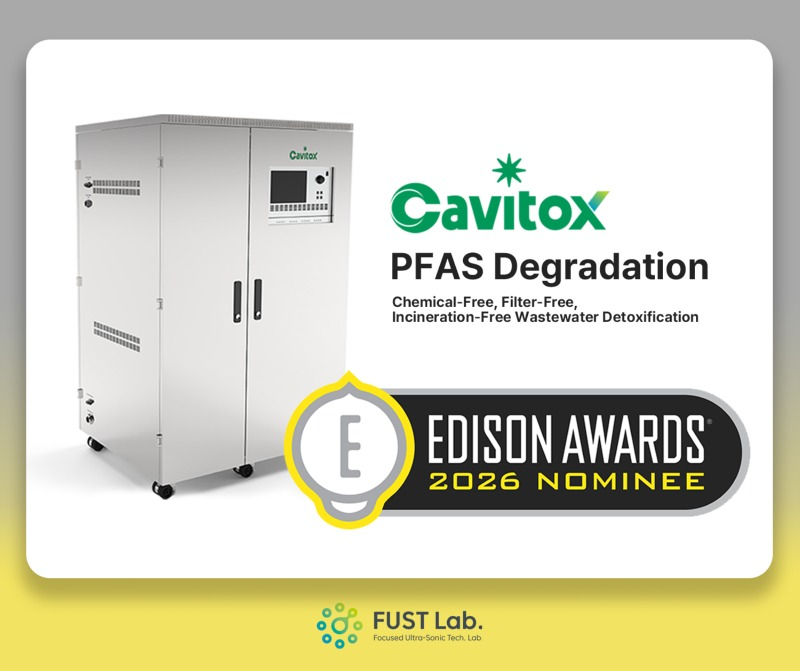
FUST Lab's CAVITOX product documentation explicitly lists Amine alongside PFAS series, TOC, and API as target treatment compounds, reflecting the broader applicability of focused ultrasonic technology to fluorinated organic compounds beyond PFAS alone.
Can Conventional Treatment Systems Handle These Emerging Contaminants?
| Technology | GenX Efficiency | Short-Chain PFAS | Key Limitation |
|---|---|---|---|
| Activated Carbon (GAC) | Low | Low | Reduced adsorption for ether-linked and short-chain compounds |
| Reverse Osmosis (RO) | Partial | Low | Smaller molecular weight increases membrane breakthrough |
| UV-AOP | Partial | Partial | Intermediate byproduct formation with some short-chain compounds |
| High-Temp Incineration | Effective | Effective | CO2 emissions, high cost, amine byproduct risk |
| Focused Ultrasound (CAVITOX) | Effective | Effective | Complex PFAS mixture validation completed [A-5] |
Meegoda et al. (2025), publishing in Springer Nature's Environmental Science and Pollution Research, validated focused ultrasound performance against complex PFAS mixtures containing both short-chain and long-chain compounds in real contamination matrices. Short-chain PFAS intermediates generated during degradation of longer compounds were themselves mineralized under continued sonication. [A-5]
How Focused Ultrasound Degrades Short-Chain PFAS
The acoustic cavitation mechanism operates by directly cleaving C-F bonds, independent of chain length. This is the key advantage over adsorption-based technologies, where shorter chains have lower binding affinity.
Sidnell et al. (2022), in a meta-analysis of 30 sonolysis studies published in Ultrasonics Sonochemistry, confirmed that sonolytic PFAS degradation operates through a physical-chemical C-F bond cleavage mechanism that applies broadly across diverse PFAS structures. Short-chain compounds follow the same degradation pathway, with any shorter fragments generated as intermediates also undergoing continued mineralization. [A-1]
Short-Chain PFAS Sonolysis Process
| Step | Description |
|---|---|
| Step 1 | Short-chain PFAS concentrates at bubble-water interface (lower surface activity than long-chain, but same mechanism) |
| Step 2 | C-F bond cleavage initiated by pyrolysis at bubble collapse and OH radical attack |
| Step 3 | Shorter fragments generated (TFA, PFBA, etc.) are exposed to the same cavitation energy and continue degrading |
| Step 4 | Final mineralization to CO₂, F⁻, H₂O |

The Regulatory Trend: Class-Based Regulation Is Coming
Regulatory approaches are evolving beyond substance-by-substance control toward class-wide frameworks that close the regrettable substitution loophole.
| Regulator | Direction |
|---|---|
| U.S. EPA | Expanded from PFOA/PFOS to include GenX (HFPO-DA), PFNA, PFHxS in the 2024 MCL rule. Comprehensive PFAS framework under development. |
| European Union | REACH Universal Restriction: structure-based class definition covers thousands of PFAS compounds, not individual substances. |
| OECD | Broad PFAS definition framework designed to prevent regulatory gap exploitation by structurally modified fluorochemicals. |
For companies managing fluorinated chemical wastewater, this regulatory trajectory has a clear implication: the question is not only which PFAS are regulated today, but which fluorinated compounds may be regulated tomorrow. Treatment technology investments should be evaluated for their ability to handle the broader class of fluorinated contaminants.
CAVITOX: A Platform for Persistent Organic Contaminants Beyond PFAS
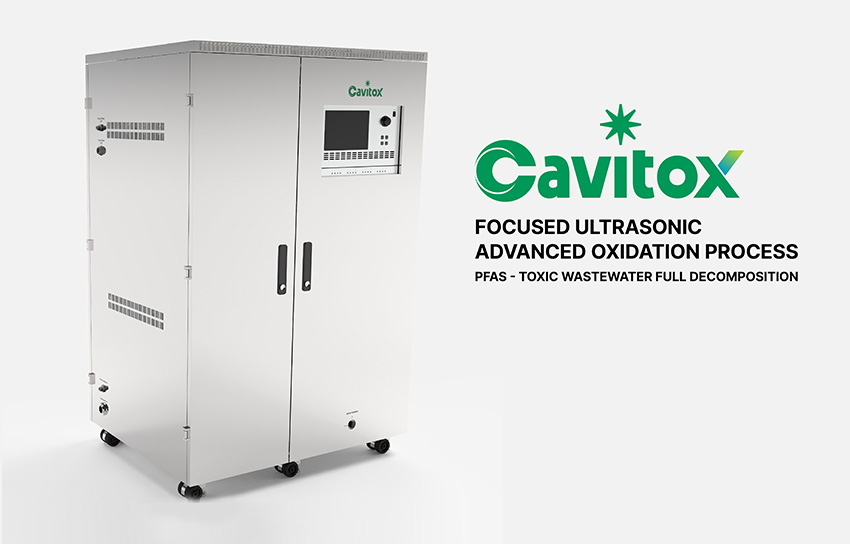
FUST Lab's focused ultrasound technology was built for PFAS, but the underlying mechanism extends further. CAVITOX's documented treatment targets include PFAS series, TOC reduction, API, and Amine, reflecting a platform approach to recalcitrant organic contaminant treatment.
CAVITOX is a next-generation water treatment solution that directly destroys PFAS at the molecular level using focused ultrasonic energy, without chemicals, incineration, or secondary waste generation. (FUST Lab.)
The physical energy-based C-F bond cleavage mechanism does not depend on a specific molecular structure. This makes CAVITOX adaptable to emerging contaminants, including GenX, short-chain PFAS, and fluorinated amines, as the regulatory landscape evolves around them.
Frequently Asked Questions
Is GenX actually safer than PFOA?
Early industry claims suggested it would be, but subsequent research has shown GenX (HFPO-DA) carries comparable concerns for liver toxicity, kidney toxicity, and immune effects. The U.S. EPA included HFPO-DA in its 2024 drinking water MCL rule at 10 ppt. The Cape Fear River contamination case in North Carolina demonstrated that GenX accumulates in water sources near manufacturing facilities in ways that parallel PFOA contamination patterns.
If short-chain PFAS leave the body faster, aren't they safer?
Shorter biological half-lives reduce the accumulation burden in individual organisms; this is accurate. However, environmental mobility is higher (lower soil adsorption), water treatment removal efficiency is lower (activated carbon and RO are less effective), and short-chain PFAS consequently reach drinking water sources more readily. The reduced bioaccumulation in individuals does not translate to lower environmental risk.
Can CAVITOX treat GenX and short-chain PFAS effectively?
Yes. The acoustic cavitation mechanism cleaves C-F bonds regardless of chain length or ether-linkage structure. The 2022 meta-analysis (Sidnell et al.) covering 30 sonolysis studies confirmed broad PFAS structural applicability, and the 2025 complex matrix study (Meegoda et al.) validated performance in mixed short- and long-chain PFAS contamination scenarios representative of real industrial conditions.
Should companies be planning for contaminants not yet regulated?
Yes. Both the EU's REACH Universal Restriction and the U.S. EPA's expanded MCL framework signal a move toward class-based PFAS regulation that will progressively reduce the regulatory gap. Given that treatment technology procurement and installation typically requires 1–3 years, evaluating platform technologies that address the broader fluorinated compound class now is the lower-risk strategic approach.
Beyond PFAS: A Platform for Persistent Fluorinated Contaminants
CAVITOX's focused ultrasound mechanism applies to the full class of recalcitrant fluorinated compounds: PFAS series, GenX, short-chain PFAS, fluorinated amines, and API. As regulation evolves, the platform adapts.
Learn more about CAVITOX → sales@fustlab.com | www.fustlab.com
References
- [A-1] Sidnell, T., et al. (2022). "Sonolysis of per- and polyfluoroalkyl substances (PFAS): A meta-analysis." Ultrasonics Sonochemistry, 87, 105944. Read the paper ↗
- [A-3] Awoyemi, O. S., et al. (2024). "Advancements on Ultrasonic Degradation of Per- and Polyfluoroalkyl Substances (PFAS): Toward Hybrid Approaches." Environments (MDPI), 11(9), 187. Read the paper ↗
- [A-5] Meegoda, J. N., et al. (2025). "Ultrasound for degradation of complex matrices of PFAS mixtures." Environmental Science and Pollution Research, 32(41), 23645–23666. Read the paper ↗