PFAS Contamination Goes Far Beyond Wastewater: Pathways, Scale, and What It Means for Remediation
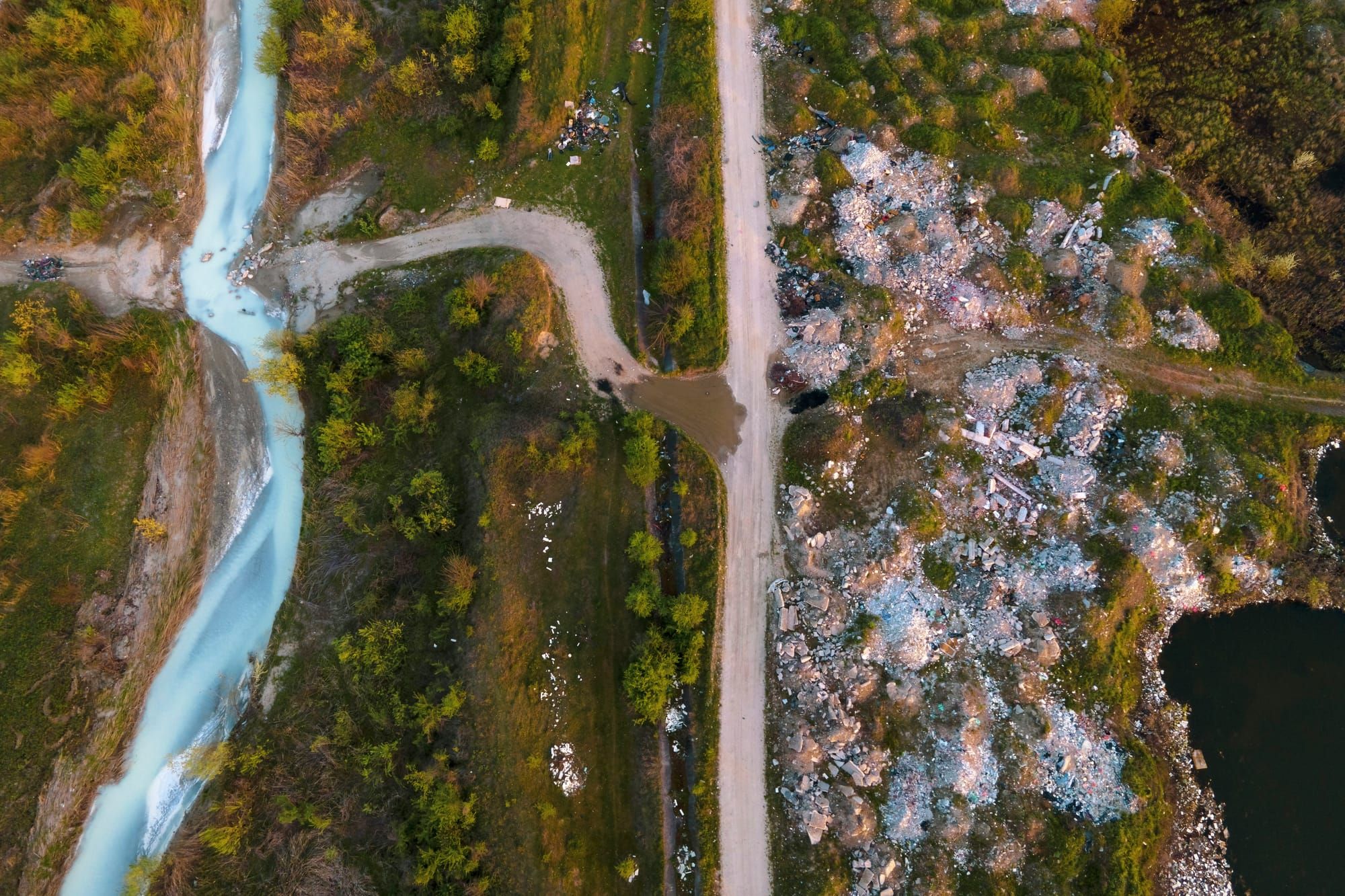
When most people think of PFAS treatment, they picture an industrial wastewater pipe. That association is understandable: industrial discharges are the most clearly regulated PFAS source. But the actual PFAS contamination map is far more complex.
Military training grounds, commercial airports, agricultural fields, rainwater, remote groundwater, and Arctic ice cores all contain PFAS. The substance has migrated far from its production sites, spreading through soil, groundwater, atmosphere, and the food chain in ways that make it a global, multi-medium environmental challenge.
This article documents how PFAS spreads through the environment, the scale of current contamination, and why treatment must extend beyond industrial wastewater.
How Does PFAS Enter the Environment?
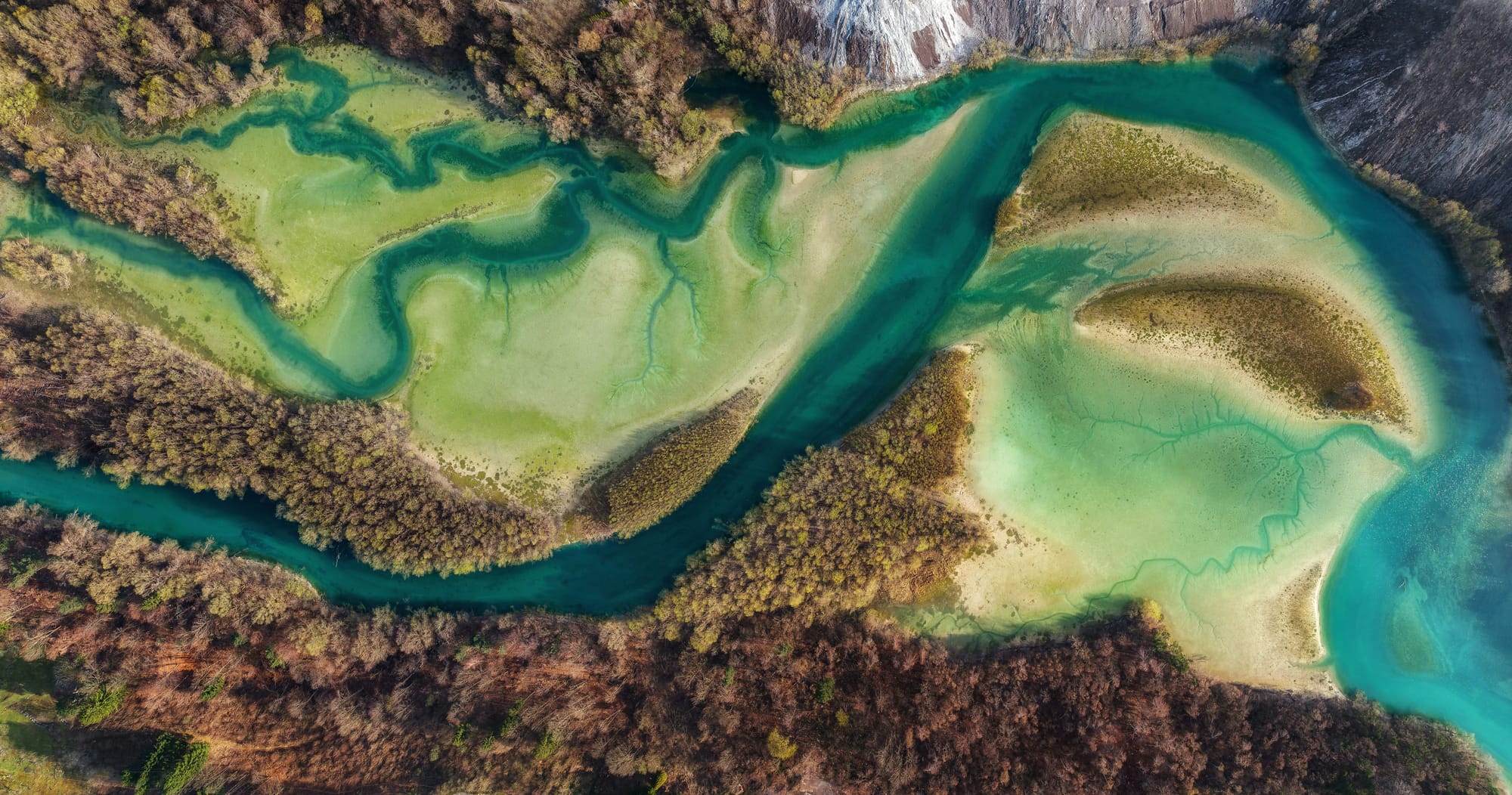
Four Primary PFAS Release Pathways
| Source | Description |
|---|---|
| Industrial wastewater discharge | PFAS-bearing effluent from semiconductor, pharmaceutical, chemical, and plating operations. Direct contamination of waterways and groundwater if treatment is inadequate. |
| AFFF firefighting foam | Aqueous Film-Forming Foam (AFFF) used at military bases, airports, and ports for decades. Soil infiltration reaches groundwater. Single largest source of PFAS site contamination globally. |
| Sewage sludge application | Municipal wastewater treatment concentrates PFAS in biosolids/sludge. Agricultural land application transfers PFAS to soil and underlying groundwater. |
| Atmospheric deposition | Airborne fluorinated particles from PFAS manufacturing and incineration, deposited via rainfall and snowfall globally, including in remote regions. |
AFFF: The Most Widespread Single Contamination Source
What Is AFFF?
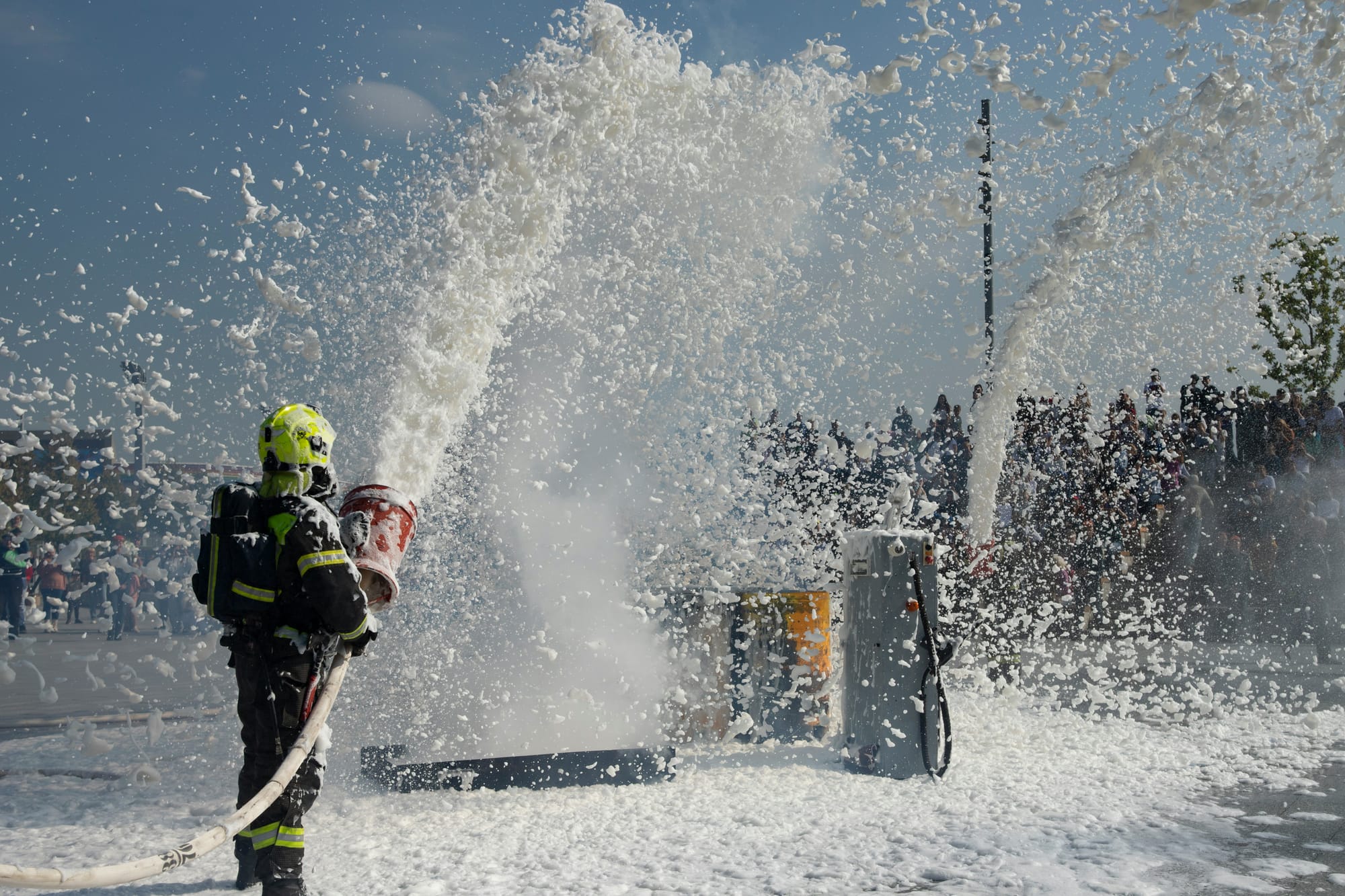
Aqueous Film-Forming Foam (AFFF) is a firefighting agent designed specifically for Class B fires: flammable liquid fires involving jet fuel, gasoline, and similar accelerants. It works by forming a thin aqueous film across the fuel surface, cutting off oxygen. The key ingredients enabling this film are fluorinated surfactants, primarily PFOS and PFOA-based compounds.
AFFF was developed at the U.S. Naval Research Laboratory in the early 1960s, with fluorochemical manufacturers including 3M supplying the fluorinated surfactants that gave AFFF its film-forming properties. The technology became standard equipment at military installations, commercial airports, oil refineries, and seaports worldwide. Decades of training exercises, live fire suppression, and equipment testing directly discharged large volumes of AFFF into soil and groundwater.
Scale of AFFF Contamination
| Region | Status |
|---|---|
| United States | 2,000+ military installations and civilian airports with documented PFAS contamination from AFFF. Some sites show PFOS in groundwater at thousands of ng/L. EPA Superfund designations expanding. |
| Australia | Multiple military base communities with contaminated drinking water sources. Billions of dollars in remediation litigation ongoing. |
| Europe | PFAS contamination documented at airports and military training areas across Germany, Netherlands, UK, and Scandinavia. |
| Japan | U.S. military bases in Okinawa; PFOS/PFOA consistently exceeds guideline values in adjacent groundwater. Local water utilities have been forced to switch intake sources. |
| South Korea | PFAS detections near USFK installations and commercial airports. Monitoring expanding. |

PFAS Contamination Pathway: From Source to Human Body
| Stage | Pathway | Key Media |
|---|---|---|
| 1. Release | Industrial discharge / AFFF application / sludge spreading / atmospheric emission | Surface water, topsoil |
| 2. Migration | Rainfall-driven soil infiltration / riverine transport / evaporation and re-deposition | Subsurface soil, groundwater, lakes and rivers |
| 3. Accumulation | Plant uptake / aquatic organism bioaccumulation / sediment deposition | Crops, seafood, soil layers |
| 4. Human intake | Contaminated drinking water / food consumption / dermal contact / inhalation | Blood, liver, kidneys, thyroid |
Soil Contamination: The Invisible Reservoir
Soil functions as a long-term PFAS reservoir. Once PFAS adsorbs to soil particles, it resists natural degradation and migrates slowly through the subsurface toward groundwater over decades. Because contamination is invisible at the surface and progresses slowly underground, it is often discovered only after it has already spread widely.
- AFFF application sites: PFAS detected at depths of tens of meters below surface; plume boundaries often still expanding
- Biosolid-amended agricultural land: PFAS uptake into crops documented for multiple food types including leafy vegetables and root crops
- Landfill leachate: Incineration ash and PFAS-containing waste in landfills generates leachate that contaminates adjacent groundwater
Groundwater Contamination: Direct Threat to Drinking Water
PFAS that infiltrates soil ultimately reaches groundwater, the source of drinking water for approximately half the global population.
Kaboré et al. (2023), analyzing 56 PFAS compounds in raw and produced drinking water globally in ACS Environmental Science & Technology, confirmed widespread contamination. The authors noted that PFAS's high water solubility and low soil retardation facilitate rapid groundwater migration, with concentrations exceeding WHO and national guidelines detected in multiple regions. [D-2]
Groundwater PFAS Contamination: Key Cases
| Location | Status |
|---|---|
| Cape Cod, Massachusetts (USA) | Military base AFFF contamination. Tens of thousands of residents affected. EPA Superfund status. |
| Okinawa, Japan | PFOS/PFOA in groundwater and rivers near U.S. military bases consistently exceeds guideline values by multiples. Municipal intake relocations. |
| Düsseldorf region, Germany | Biosolid application linked to PFAS contamination of drinking water wells. Directly contributed to EU tightening standards. |
| Korea (Seoul metro, Yeongnam region) | PFAS detected in groundwater near industrial complexes. Ministry of Environment expanding monitoring scope. |

Atmospheric Transport: Contamination Without Borders
PFAS spreads through air in ways that respect no geographic boundary. This pathway is particularly significant because it explains how contamination appears in locations with no nearby industrial sources.
- Fluoropolymer manufacturing: Airborne release of fine PFAS particles during PTFE and PVDF production
- Incineration of PFAS-containing waste: Incomplete combustion releases PFAS and pyrolysis byproducts in flue gases
- Surface contamination re-suspension: Wind-borne transport of PFAS-contaminated soil dust
- Sea spray: Aerosolization from contaminated ocean surface, a documented coastal pathway
Cousins et al. (2022) at Stockholm University, writing in ACS Environmental Science & Technology, sampled rainwater globally including Antarctica and the Tibetan Plateau, finding PFAS at concentrations that frequently exceeded EPA health advisory levels even at the most remote locations. Their analysis identified atmospheric long-range transport as a primary driver of global PFAS distribution. [D-1]
Why Conventional Remediation Is Not Enough
PFAS site remediation is fundamentally different from cleaning up petroleum spills or heavy metal contamination. Most established remediation approaches have significant limitations.
| Approach | Limitation |
|---|---|
| Pump and Treat (P&T) | Extracts contaminated groundwater to surface for treatment. Activated carbon removes PFAS but does not destroy it. Requires decades of operation; PFAS still exists in spent carbon. |
| Soil Washing | PFAS water solubility allows extraction from soil, but the resulting PFAS-bearing wash water still requires treatment. The problem is transferred, not solved. |
| Natural Attenuation | PFAS resists natural biodegradation. Monitored natural attenuation is not a viable standalone strategy for PFAS. |
| Thermal Treatment (in-situ) | High-temperature soil heating can partially destroy PFAS, but energy costs are prohibitive at scale and effectiveness varies by soil type. |
The common thread across all these approaches: PFAS can be moved or separated, but not destroyed. Effective site remediation ultimately requires a technology capable of mineralizing PFAS in the extracted water or concentrated streams, not just re-concentrating it.

CAVITOX: Validated on Real Contamination Site Samples
FUST Lab has validated CAVITOX not only on laboratory solutions or synthetic PFAS samples, but on real groundwater collected from actual PFAS-contaminated sites.
Meegoda et al. (2025), publishing in Springer Nature's Environmental Science and Pollution Research, tested focused ultrasound against real complex PFAS matrices including groundwater, industrial wastewater, and AFFF-impacted samples, confirming effective degradation across diverse PFAS mixtures under conditions representative of actual site contamination. [A-5]
In FUST Lab testing, three groundwater samples collected from PFAS-contaminated sites (Sites A, B, and C) were treated with CAVITOX. All 12 target PFAS compounds were reduced to below detection limits in all three samples. This validation confirms CAVITOX applicability not only to industrial wastewater, but to AFFF-impacted groundwater and soil washing effluent, the key liquid streams generated in environmental site remediation.
Frequently Asked Questions
Is AFFF still being used today?
Many countries have banned or restricted PFOS/PFOA-based AFFF, and some have mandated transition to fluorine-free firefighting foams (F3). However, contamination from historical AFFF use, accumulated over 50+ years, is already extensive and will require active remediation regardless of future use decisions. In some jurisdictions, PFAS-containing AFFF stocks are still in service pending alternatives certification.
How can I find out if my local drinking water is contaminated with PFAS?
In the U.S., EPA's UCMR5 monitoring data for public water systems is publicly available at EPA's website. Many water utilities also publish their own annual water quality reports. In Japan, the Ministry of Environment publishes PFAS monitoring data by prefecture. In Korea, the Ministry of Environment operates a water quality information portal. For private wells, certified laboratory testing is recommended.
How is PFAS soil contamination remediated?
Current best practice follows a two-stage approach: first, soil washing or groundwater pump-and-treat to physically separate PFAS from the contaminated medium, generating a concentrated PFAS-bearing water stream; second, destruction of that concentrated stream using a technology capable of mineralizing PFAS, such as focused ultrasound (CAVITOX). CAVITOX is designed for this post-extraction destruction stage.
Can CAVITOX be deployed at contamination sites in the field?
Yes. CAVITOX's modular design allows field deployment at contamination sites for treatment of extracted groundwater or soil washing effluent. FUST Lab offers mobile demo unit deployment for pilot testing at specific sites before full installation commitment, allowing performance validation under site-specific conditions.
PFAS Treatment Beyond the Wastewater Pipe
CAVITOX is validated for PFAS destruction in real contamination scenarios: industrial wastewater, AFFF-impacted groundwater, and complex mixed-PFAS matrices. From wastewater treatment to site remediation, one platform.
Learn more about CAVITOX → sales@fustlab.com | www.fustlab.com
References
- [D-1] Cousins, I. T., et al. (2022). "Outside the Safe Operating Space of a New Planetary Boundary for Per- and Polyfluoroalkyl Substances (PFAS)." Environmental Science & Technology (ACS), 56(16), 11172–11179. Read the paper ↗
- [D-2] Kaboré, H. A., et al. (2023). "Occurrence, Fate, and Related Health Risks of PFAS in Raw and Produced Drinking Water." Environmental Science & Technology (ACS), 57(8), 3062–3074. Read the paper ↗
- [A-5] Meegoda, J. N., et al. (2025). "Ultrasound for degradation of complex matrices of PFAS mixtures." Environmental Science and Pollution Research, 32(41), 23645–23666. Read the paper ↗