CAVITOX Technology Explained: How Focused Ultrasound Destroys PFAS at the Molecular Level
CAVITOX is a next-generation water treatment solution that directly destroys PFAS at the molecular level using focused ultrasonic energy, without chemicals, incineration, or secondary waste generation. (FUST Lab.)
Destroying PFAS is chemically extraordinary. The carbon-fluorine (C-F) bond, the structural foundation of all PFAS compounds, is one of the strongest bonds in nature. Conventional oxidizing agents like ozone and hydrogen peroxide cannot break it. This is why most PFAS treatment technologies can only move PFAS from one place to another, never eliminating it.
CAVITOX solves this with focused ultrasonic technology. The extreme energy conditions created by focused ultrasound inside a liquid medium are sufficient to directly cleave C-F bonds. Here is a detailed explanation of how.
What Is Focused Ultrasonic Technology?
Ultrasound refers to sound waves at frequencies above human hearing (>20 kHz). In industrial applications, ultrasound has long been used for cleaning, emulsification, and dispersion.
The critical word in CAVITOX is "focused." Unlike conventional ultrasonic equipment that disperses energy across a wide area, CAVITOX uses a cylindrical piezoelectric transducer structure that concentrates ultrasonic energy into a narrow central zone, maximizing energy density at the point where PFAS treatment occurs.
Focused vs. Conventional Ultrasound
| Type | Characteristics |
|---|---|
| Probe / Horn type | Energy radiates outward from probe tip. Limited treatment volume. Tip erosion problem. |
| Bath type | Low-intensity energy distributed across tank. Insufficient energy density for PFAS destruction. |
| Focused (CAVITOX) | Cylindrical structure concentrates energy at central axis. Maximum energy density. Continuous large-volume processing. |
Acoustic Cavitation: The Core Mechanism
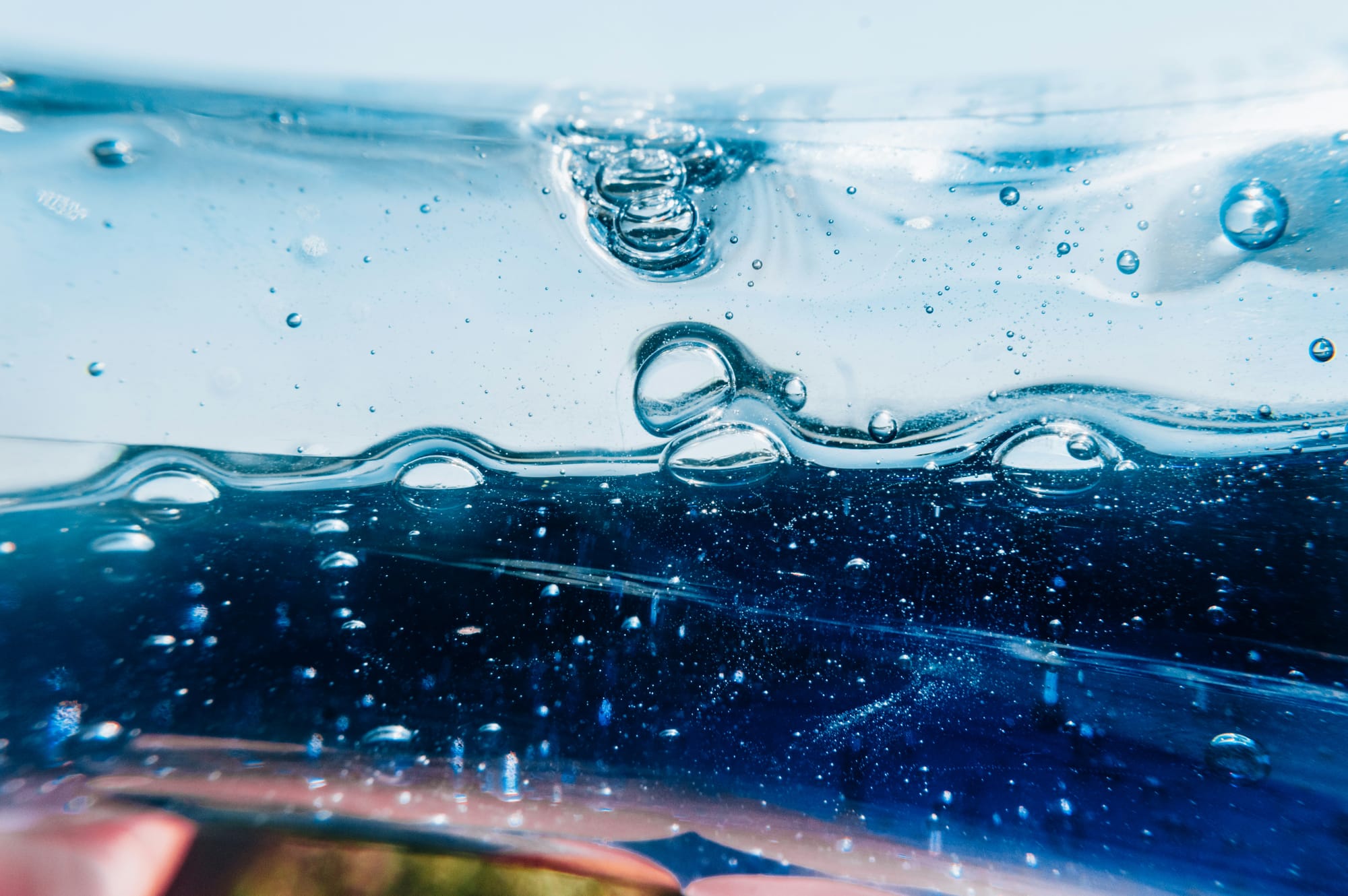
CAVITOX destroys PFAS through acoustic cavitation. As ultrasound propagates through liquid, cyclic pressure variations cause microscopic bubbles to form, grow, and collapse violently.
The collapse event generates extreme local conditions:
Conditions at Bubble Collapse
| Condition | Value |
|---|---|
| Local temperature | ~5,000 K (comparable to the sun's surface) |
| Local pressure | ~1,000 atm (100× the pressure at 1 km ocean depth) |
| OH radical generation | Oxidizing power ~2,000× stronger than ozone |
| Micro-jetting | High-velocity liquid jets that directly impact PFAS molecules at bubble walls |
PFAS molecules are selectively concentrated at the bubble-water interface due to their hydrophobic and fluorophilic nature, placing them directly in the zone of maximum energy impact.
"PFOA and PFOS undergo sonolytic degradation at the bubble-water interface through pyrolysis driven by the extreme temperatures at bubble collapse, generating inorganic products including CO₂, fluoride ions, and water. The C-F bond is cleaved sequentially as the PFAS undergoes stepwise defluorination." [A-4]
Why "Focused"? The Decisive Difference from Conventional Ultrasound
Ultrasonic degradation of PFAS has been studied for decades. Most research used bath-type or horn-type devices and found limited practical efficiency; insufficient energy density prevented effective mineralization at industrial scales.
"Across the 400–1,000 kHz frequency range tested for PFOS degradation, energy density and frequency are the critical parameters determining PFAS destruction efficiency. The operational frequency range of CAVITOX (350–420 kHz) aligns directly with the optimal range identified in this research." [A-2]
Empirical Comparison: Conventional vs. CAVITOX
| System | Result |
|---|---|
| Bath / Horn ultrasound | After 2+ hours of treatment: active radical generation not visually confirmed. PFAS destruction efficiency low. |
| CAVITOX focused ultrasound | Active radical generation confirmed within 5 minutes of treatment start. High energy-density concentration effect. |
The focused geometry also enables continuous inline flow processing, making scale-up from pilot to industrial production feasible in a way that bath systems cannot achieve.
How C-F Bonds Are Broken: Stepwise Mineralization
CAVITOX does not merely reduce PFAS concentrations. It achieves complete mineralization: converting PFAS molecules stepwise into harmless inorganic end products.
PFAS Mineralization, Step by Step
| Step | Description |
|---|---|
| Step 1: Bubble surface concentration | PFAS molecules (hydrophobic, fluorophilic) selectively concentrate at the bubble-water interface. |
| Step 2: C-F bond cleavage begins | Pyrolysis at bubble collapse plus OH radical attack on C-F bonds. Long-chain PFAS cleaved into shorter fragments. |
| Step 3: Short-chain PFAS degraded | Intermediate short-chain PFAS (PFBA, PFPeA, etc.) continue through the same process. |
| Step 4: Complete mineralization | Final products: CO₂, F⁻ (fluoride ion), H₂O. No toxic byproducts. |
"Meta-analysis of 30 sonolysis studies confirmed that ultrasound can mineralize PFAS to inorganic products including CO₂ and fluoride. Short-chain intermediates are generated transiently but are themselves degraded under continued sonication, confirming the potential for complete mineralization." [A-1]
Validated Performance Data: 99.99%+ Across 12+ PFAS
FUST Lab has validated CAVITOX performance against real industrial wastewater samples from semiconductor, pharmaceutical, and chemical industry sources.
PFAS Destruction Performance
| PFAS Compound | Molecular Formula | Before [ppb] | After [ppb] | Reduction |
|---|---|---|---|---|
| PFBA | C₄F₇COOH | 1,761.7 | 0.033 | 99.99% |
| PFPeA | C₄F₉COOH | 1,538 | 0.052 | 99.99% |
| PFHxA | C₅F₁₁COOH | 971.7 | 0.124 | 99.99% |
| PFOA | C₇F₁₅COOH | 668.9 | 0.192 | 99.99% |
| PFNA | C₈F₁₇COOH | 391 | N.D. | 99.99% |
| PFUnDA | C₁₀F₂₁COOH | 603.7 | 2.092 | 99.99% |
| PFDoDA | C₁₁F₂₃COOH | 697.4 | 17.9 | 99.99% |
| PFTA | C₁₃F₂₇COOH | 712.7 | 38.92 | 99.99% |
| 6:2 FTS | C₈H₄F₁₃O₃S | 1,158.3 | 0.200 | 99.99% |
| 8:2 FTS | C₁₀H₄F₁₇O₃S | 1,820.9 | 0.814 | 99.99% |
In real groundwater samples (A, B, C, taken from PFAS-affected sites), all 12 PFAS target compounds were reduced to below detection limits after CAVITOX treatment. Both Short-Chain PFAS (≤C8) and Long-Chain PFAS (≥C10) achieved >95% destruction.
Industry Application Cases
Semiconductor Wastewater: Destruction Even in Sulfuric Acid Conditions
Wastewater from semiconductor processes is a complex chemical environment containing large amounts of sulfuric acid (H₂SO₄). When a PFOA sample at 91.5 ppb was treated under these sulfuric-acid conditions, it was reduced to below the detection limit. This demonstrates that CAVITOX destroys PFAS effectively even in complex industrial wastewater.
Pharmaceutical Wastewater: API (Active Pharmaceutical Ingredient) Treatment
Wastewater containing low-molecular-weight pharmaceutical compounds (APIs) is typically incinerated due to its high recalcitrance and toxicity. CAVITOX delivered notable results in this area as well.
| API Compound | Use | Before [ppb] | After [ppb] | Reduction |
|---|---|---|---|---|
| Sitagliptin | Type 2 diabetes treatment | 53.0 | 0.1997 | 99.4% |
| Telmisartan | Cardiovascular disease treatment | 17.2 | 0.54 | 99.9% |
| PFOB | Pharmaceutical-industry PFAS compound | 13,280 | 3.0 | 99.9% |
| Tramadol | Analgesic | 1,228 | 0.0178 | 99.9% |
Toxicity Assessment: Biological Safety Verification
The reduction in biological toxicity of CAVITOX-treated water was verified using a zebrafish embryo survival assay. Toxicity was reduced by up to 4× compared with before treatment, and an official report from the Korea Institute of Toxicology (KIT) confirmed a negative genotoxicity result.
Competitive Technology Comparison
"Focused ultrasound technology represents a sustainable approach to PFAS contaminant remediation, offering direct physical degradation without chemical additives, providing a distinct environmental advantage over chemical AOP approaches that generate secondary contamination risks." [A-6]
| Technology | Destroys PFAS? | Chemicals | Secondary Waste | Scalability | Cost |
|---|---|---|---|---|---|
| Activated Carbon | ❌ Moves only | None | Spent carbon / ash | High | Medium |
| Reverse Osmosis | ❌ Moves only | None | Concentrate stream | High | Medium |
| UV-AOP | Partial | H₂O₂, ozone | Low | Limited | High |
| Electrochemical | Partial | Electrolytes | Electrode waste | Difficult | High |
| Incineration | ✅ Full | None | CO₂, ash | High | High |
| CAVITOX (Focused US) | ✅ Full (99.99%) | None required | None | Modular | Medium |
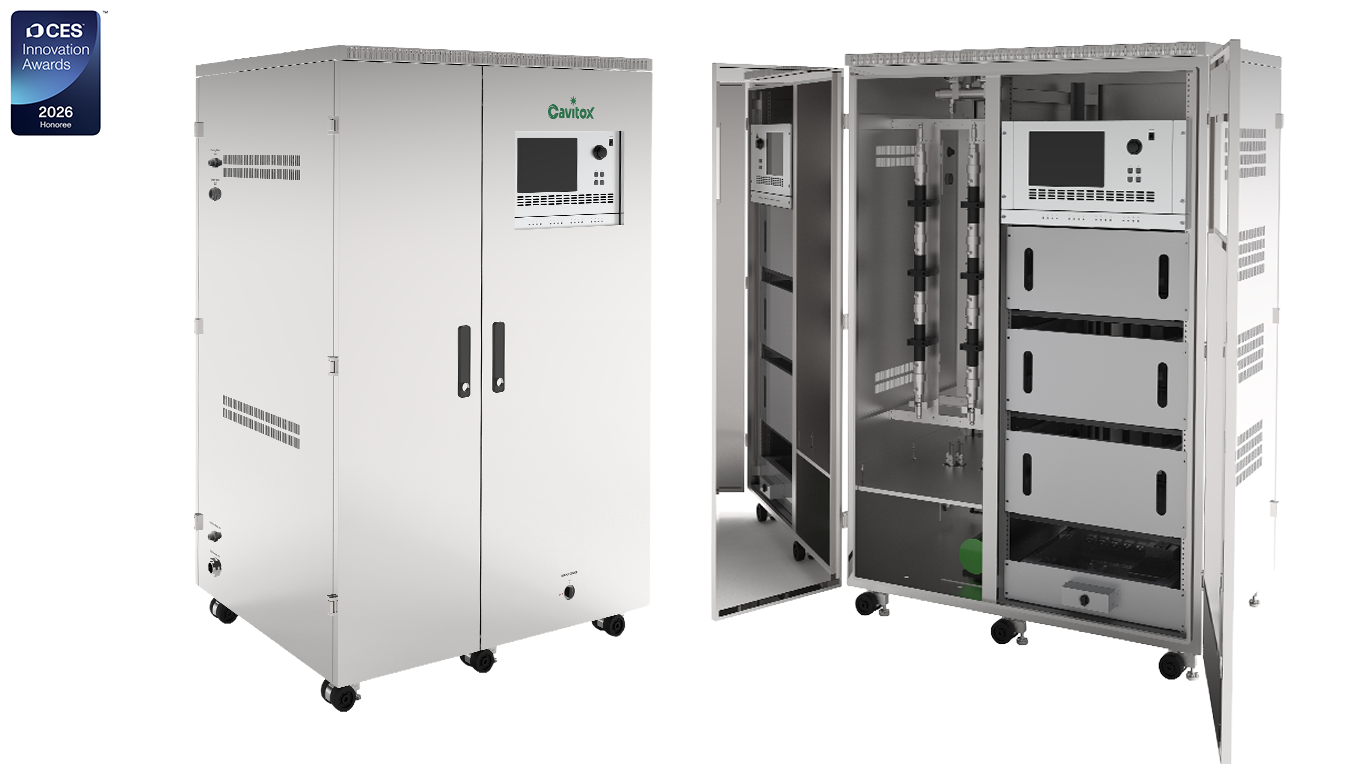
CAVITOX Equipment Specifications: Model FS-W16K1
| Specification | Detail |
|---|---|
| Model | FS-W16K1 |
| Operating Frequency | 350 kHz to 420 kHz |
| Output Power | MAX 100W |
| Power Supply | AC100V to 240V, 50/60Hz · Consumption: 3.5kW (AC220V) |
| Processor Dimensions | 1,360mm(W) × 910mm(D) × 1,815mm(H), 350kg |
| Control Interface | 10.1" Touch LCD, all functions controllable from display |
| Pump Flow Rate | Wastewater circulation max 60L/min (50Hz) |
| Cooling System | External cooling circulator required (customer-supplied) |
| Scalability | Modular system, multiple units connectable for capacity scaling |
Frequently Asked Questions
Which PFAS compounds can CAVITOX destroy?
CAVITOX has been validated against both short-chain (C4–C7) and long-chain (C8+) PFAS. In empirical testing, 12+ PFAS compounds including PFBA, PFPeA, PFHxA, PFOA, PFNA, PFUnDA, PFDoDA, PFTA, and FTS-series compounds all achieved 99.99%+ destruction efficiency. The system is also validated for pharmaceutical API destruction in wastewater.
What happens to the fluoride released when C-F bonds break?
When C-F bonds are cleaved, fluoride ions (F⁻) are released into the water. Fluoride ions are non-toxic inorganic compounds naturally present in the environment and human body. At concentrations produced by CAVITOX treatment, fluoride levels fall well within safe drinking water guidelines. Additional ion removal steps can be integrated if required for specific applications.
Can CAVITOX be connected to an existing wastewater treatment system?
Yes. CAVITOX is designed as an inline system that connects to the end-point of existing wastewater treatment processes. No major construction is required. The modular structure allows capacity to scale by connecting multiple units in series or parallel, depending on flow rate and PFAS loading requirements.
How does CAVITOX compare to UV-AOP in terms of cost?
Unlike UV-AOP, CAVITOX requires no hydrogen peroxide, ozone, or other chemical inputs, eliminating ongoing reagent costs. CAVITOX also generates no secondary waste streams, avoiding the disposal costs associated with chemical AOP byproducts. Compared to incineration, CAVITOX produces no CO₂ and avoids Scope 3 carbon costs. For a site-specific cost comparison, contact our technical team.
The New Standard for PFAS Destruction
CAVITOX directly cleaves PFAS C-F bonds using focused ultrasonic energy. No chemicals. No incineration. No secondary waste. Validated at 99.99%+ destruction efficiency across 12+ PFAS compounds in real semiconductor, pharmaceutical, and chemical industry wastewater.
Learn more about CAVITOX → sales@fustlab.com | www.fustlab.com
References
- [A-4] Vecitis, C. D., et al. (2008). "Kinetics and Mechanism of the Sonolytic Conversion of the Aqueous Perfluorinated Surfactants, PFOA and PFOS, into Inorganic Products." Journal of Physical Chemistry A, 112(18), 4261–4270. Read the paper ↗
- [A-1] Sidnell, T., et al. (2022). "Sonolysis of per- and polyfluoroalkyl substances (PFAS): A meta-analysis." Ultrasonics Sonochemistry, 87, 105944. Read the paper ↗
- [A-2] Wood, R. J., et al. (2020). "Ultrasonic degradation of perfluorooctane sulfonic acid (PFOS) correlated with sonochemical and sonoluminescence characterisation." Ultrasonics Sonochemistry, 64, 104959. Read the paper ↗
- [A-6] (2025). "Focused ultrasound technology for the direct degradation of PFAS: a sustainable approach to contaminant remediation." Separation and Purification Technology, Elsevier. Read the paper ↗